
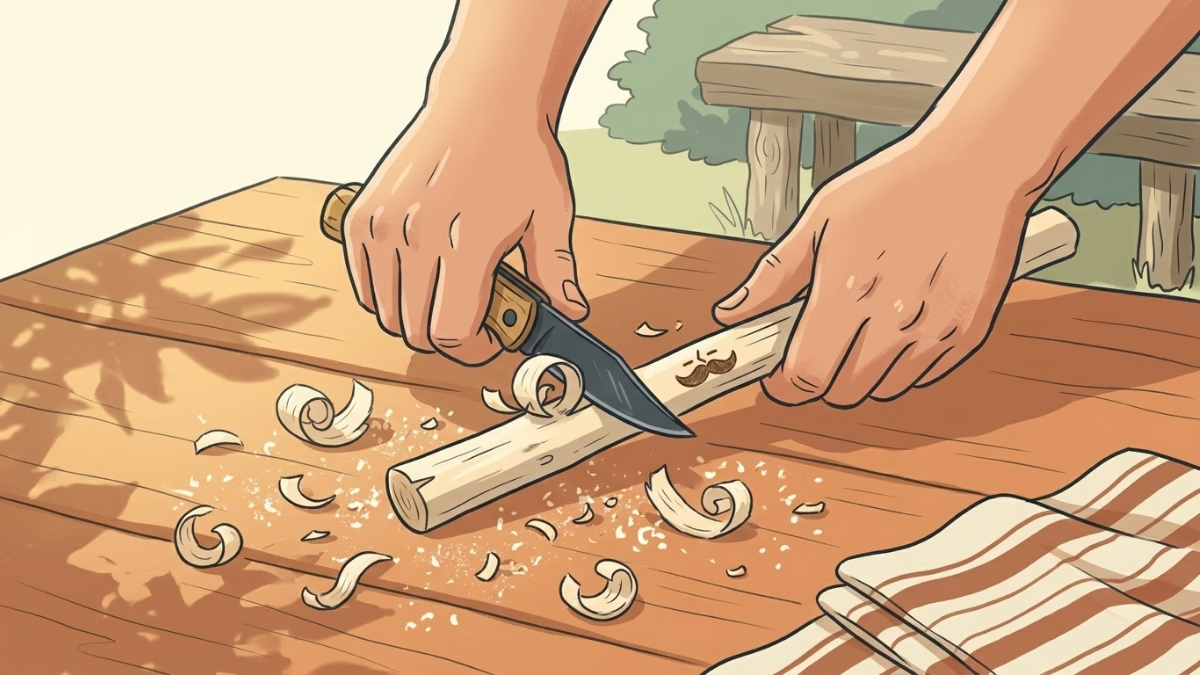
Your first whittled thing will probably look like a confused potato. That is fine. That is, honestly, the whole point.
Simple whittling projects for beginners don’t ask you to be talented. They ask you to show up with a stick, a knife, and maybe 20 minutes you were going to spend doomscrolling anyway. The payoff isn’t a beautiful object. It’s the rare, slightly weird experience of making something with your hands and being completely present while you do it, even if the thing you make is a lumpy spoon that couldn’t hold soup without making a philosophical statement about impermanence.
Key Takeaways
- Beginner whittling guides recommend starting with simple forms like a practice feather, mushroom, or basic point because they use just a few cuts and minimal tools.
- A scrap branch, a tree branch from the yard, or an inexpensive basswood blank are all valid starting materials, no special stock required.
- Whittling works as a low-stakes anti-perfection practice because the wood itself forces you to accept asymmetry and “done enough.”
- A practice feather using shallow stop cuts and light texture cuts is one of the most recommended first projects for beginner wood carvers.
- The emotional payoff of whittling comes from focused, manual attention, not from the finished object being impressive.
What to Actually Make First: Simple Whittling Projects for Beginners
Beginner whittling guides consistently recommend starting with the simplest possible forms: a practice feather, a small mushroom, a basic point, or a little animal figure, per The Whittling Guide. These shapes share a few traits, minimal tools, simple cuts, and a finished piece that feels satisfying even when it’s slightly crooked (especially when it’s slightly crooked, really).
If you want easy basswood whittling projects specifically, the practice feather and the mushroom are the two shapes every guide returns to.
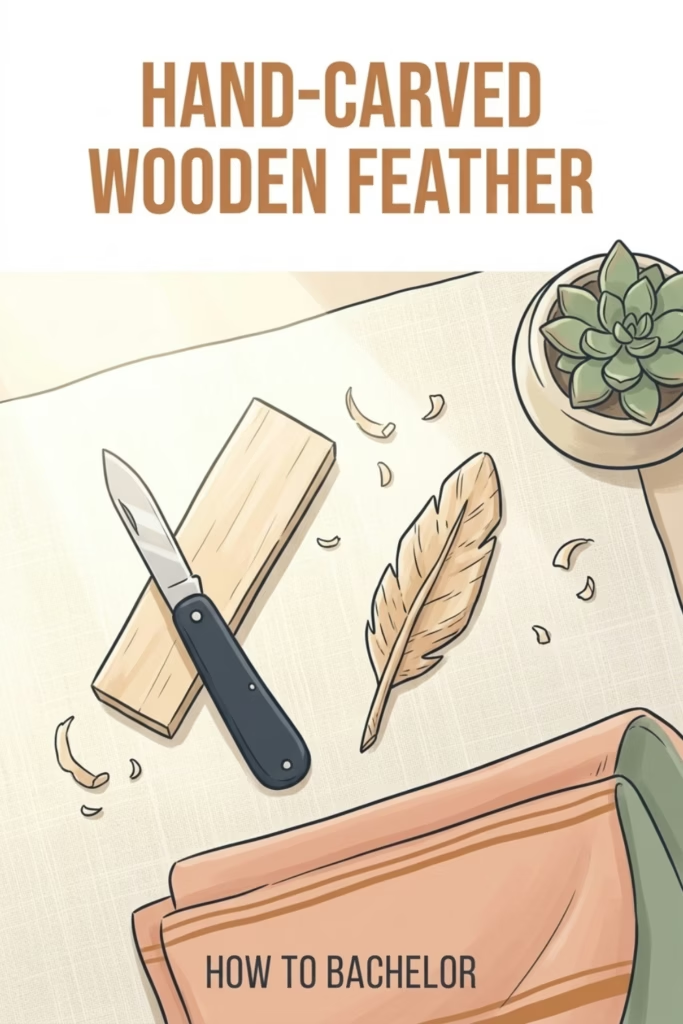
A practice feather is probably the most forgiving entry point. You start with a basswood blank or a smooth stick from the yard, make shallow stop cuts, and use light texture cuts to suggest the barbs, per The Whittling Guide. The result looks like a feather the way a kindergartner’s drawing looks like a horse: vaguely correct, completely charming, entirely yours.
Mushrooms are another classic starter because the shape is naturally round and forgiving. A lopsided mushroom cap just looks rustic. You can’t really lose.
You don’t need special wood either. A scrap branch, a dry stick, or a cheap basswood block from a craft store, per Crafty Cedar, all work. The barrier to starting is genuinely just: do you have a knife and something to cut.
Why Doing It Badly Is Actually Good
Here’s the thing nobody says loudly enough about hobbies like this: the imperfection is the feature, not a bug you’ll fix later.
Wood doesn’t care about your plans. You’ll make a cut that goes slightly deeper than you meant, and now you’re carving around it. That’s not a mistake. That’s the hobby. It forces a kind of flexible, present-moment attention that’s genuinely hard to manufacture any other way, harder than meditation apps, and you get a weird little mushroom at the end instead of a streak badge.
If you’ve been treating “good enough” as a consolation prize in other parts of life, 20 minutes with a stick and a knife is a surprisingly effective reminder that being a work in progress is just… the process. Not a detour from it.
And honestly? A lopsided wooden feather sitting on your desk hits different than anything you could’ve bought. It’s proof you did something, even if the something looks like it survived a minor incident.
Frequently Asked Questions
What is the easiest whittling project for a complete beginner?
A practice feather or a simple pointed stick are widely recommended as starting points because they use shallow stop cuts and need only one or two tools, per The Whittling Guide. A small mushroom shape is another popular first project because its rounded cap is naturally forgiving of uneven cuts. Pick whichever shape you’d actually enjoy having on your desk afterward.
What wood should I use for beginner whittling projects?
Basswood is the most commonly recommended wood for beginners because it’s soft, consistent, and easy to find at craft stores, per The Whittling Guide. A smooth dry stick from the yard works too, the main thing to avoid is green (freshly cut) wood, which is unpredictable, or very hard woods like oak that will fight you the whole way.
Do I need a special whittling knife to start?
A basic, sharp folding knife or a dedicated whittling knife will do. The key word is sharp, a dull blade requires more force, which leads to slipping, which leads to a trip to the first-aid kit (not the fun kind). You don’t need a full set of carving tools for simple beginner projects.
Is whittling actually good for stress relief?
Whittling for stress relief works for a lot of people because it demands just enough focused attention to crowd out whatever’s running in the background of your brain. The repetitive, tactile nature of the cuts gives your hands something real to do. Whether it counts as “stress relief” officially is between you and your cortisol, but it’s a lot cheaper than most alternatives.
What can I make as a beginner beyond a stick or feather?
Once the basic cuts feel comfortable, simple keychains, small animal figures, and spoons are natural next steps (per Crafty Cedar and Wally’s Woodworking Plans). A spoon is a bit more ambitious but deeply satisfying, and if it can’t actually hold soup, you’ve still made a spoon, and that counts.
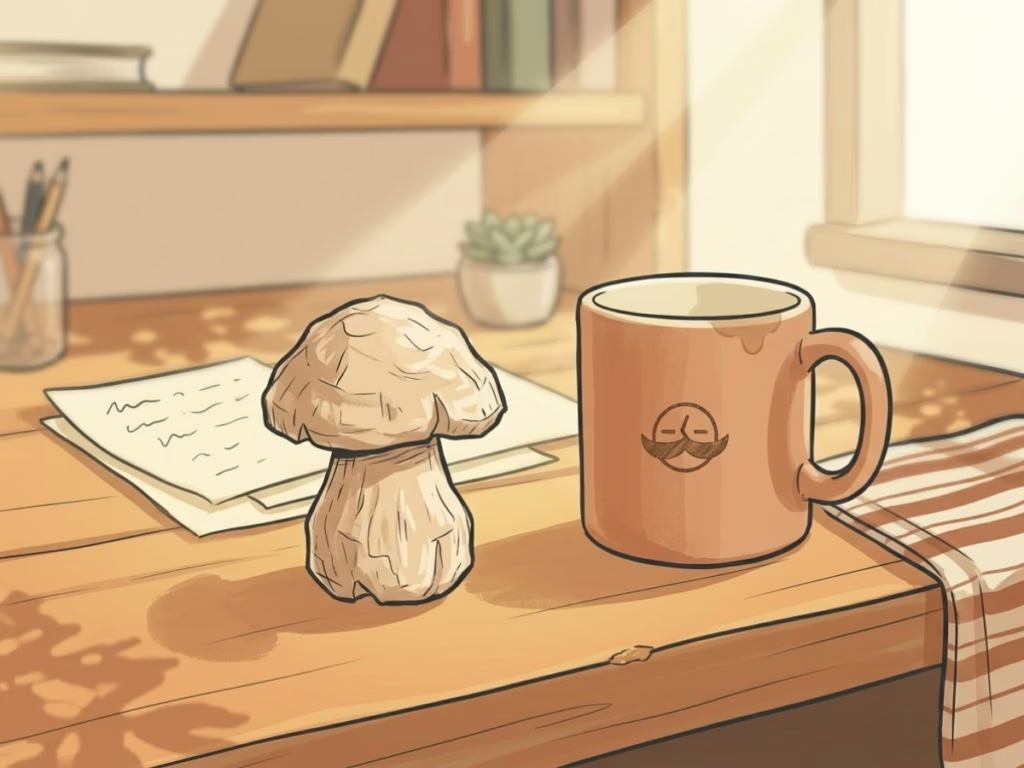
Today’s move: find a dry stick outside or grab a small basswood block, pull up a five-minute beginner feather tutorial, and make something bad. Put it somewhere you’ll see it. Not as a reminder of how far you have to go, as proof you started.
Get The Enough List — free.
Ten minutes, five areas. A short guide for figuring out what enough looks like in money, health, work, people, and time — before you go sprinting at someone else's finish line. Yours when you subscribe.

Thoughts?