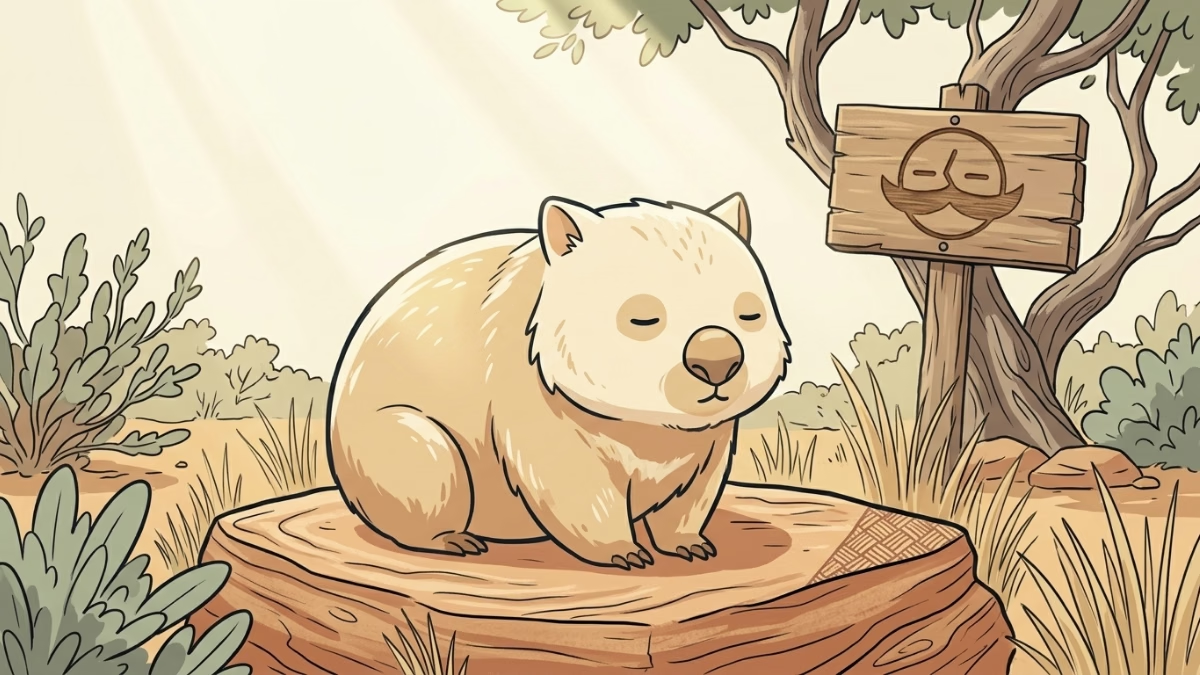
So you want to know why wombats have square poop. Short answer: it’s the intestine, not a square sphincter. (The first thing everyone wonders, and no, nature did not go that route.) The real mechanism is stranger and more elegant than the obvious guess.
Key Takeaways
- Wombat feces stay liquid-like through roughly 75% of the intestine and only become cube-shaped in the final 8% of the gut, where changing elasticity creates flat sides, per BBC.
- The cube shape is formed inside the intestine, not at the point of exit, there is no square sphincter, per ABC News.
- Researchers believe the cube shape is an anti-roll design: square droppings stay put on rocks, logs, and burrow entrances for territorial marking, per The Guardian.
- Wombats can identify other individuals from chemicals in their feces, using poop as social communication about sex, age, and reproductive status, per UGA Today.
It’s All in the Intestine
Here’s the short version: wombat feces stay liquid-like through roughly 75% of the intestine and only solidify in the final 8% of the gut, per BBC. In that last stretch, alternating stiff and flexible bands squeeze and shape the material as it dries, pressing flat sides and edges into what would otherwise just be… a regular poop situation.
Scientists confirmed this by studying dead common wombat intestines and literally inflating them with balloons to measure how the elasticity changed along the length, per Science.org. That is a real job that real researchers did, and honestly, good for them.
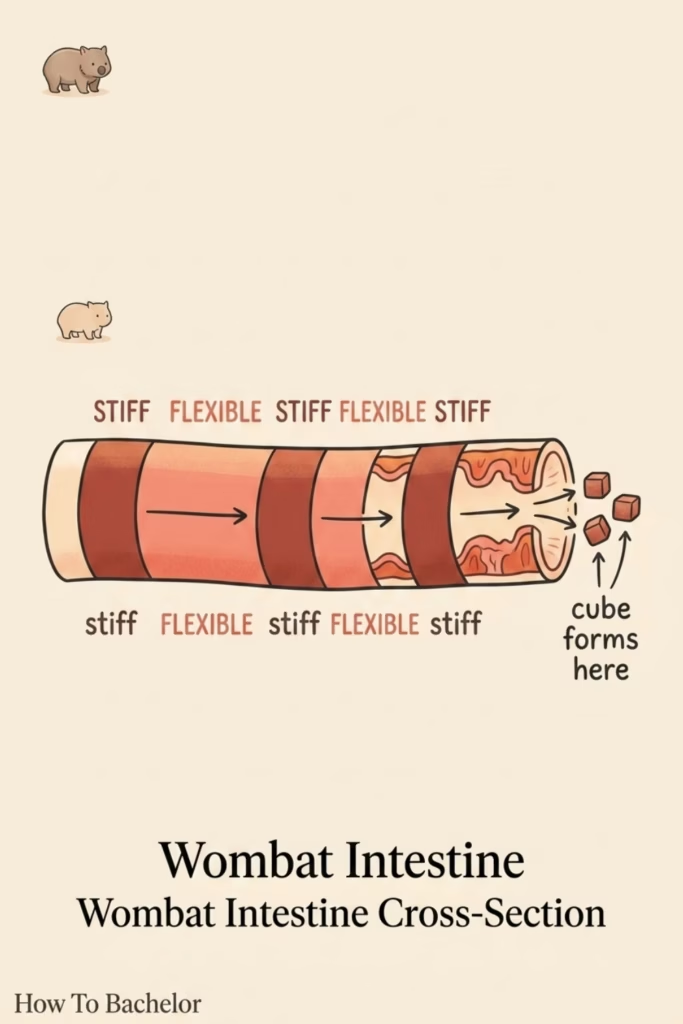
A 2023 report from the Australian Broadcasting Corporation confirmed the cubic shape is created entirely within the intestine, not at the point of exit, per ABC News.
So: no square sphincter. Just a very specialized gut doing something no other known mammal’s gut does.
Why Do Wombats Have Square Poop, Anyway?
This is where it gets genuinely clever. Wombats use their droppings to mark territory, and they tend to leave them on top of rocks, logs, and burrow entrances, per The Guardian. Cubes don’t roll.
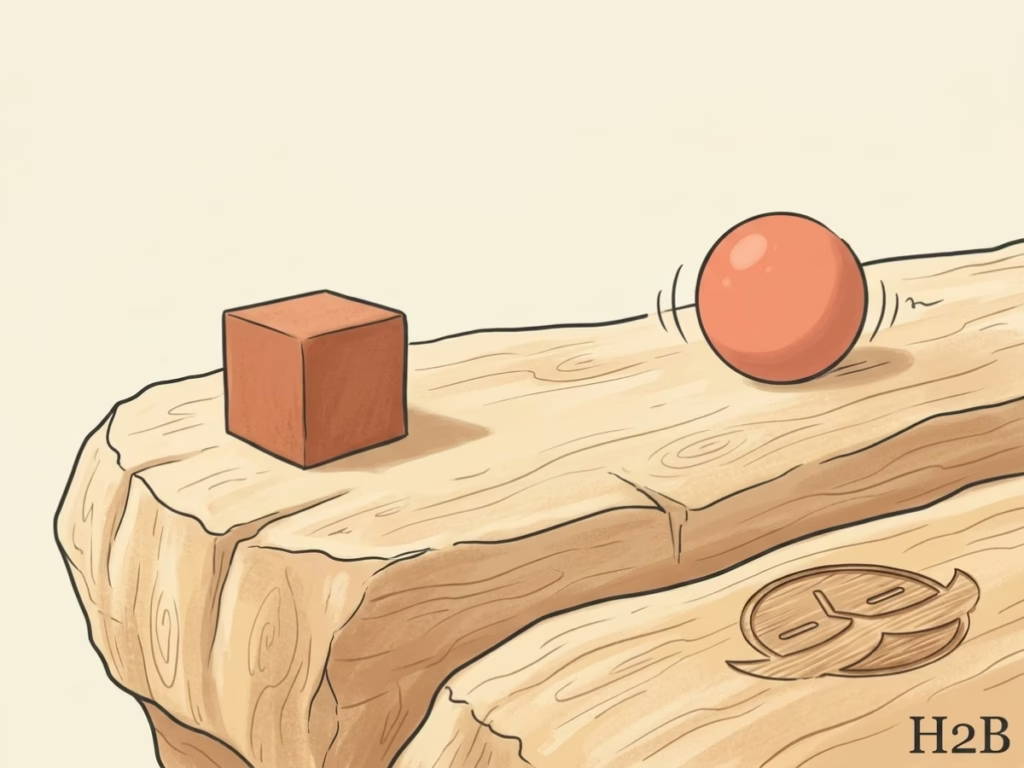
A sphere or a cylinder lands and keeps going. A cube lands and stays exactly where you left it, like a tiny biological Post-it note that says this is mine.
It gets more interesting. Wombats can apparently read those notes. Research from the University of Georgia found that wombats recognize other individuals from chemicals in their feces, picking up information about sex, age, and reproductive status, per UGA Today. The poop isn’t just a boundary marker. It’s a whole social profile, weather-proofed by geometry.
Nature spent millions of years on this. The wombat’s intestine is basically a soft-matter manufacturing line producing anti-roll communication devices. Which, when you put it that way, sounds like something out of a DARPA brief.
If you like the “the real answer is weirder than the obvious one” genre, the bristlecone pine piece scratches the same itch. Ancient trees doing something quietly extraordinary, silently and slowly.
Frequently Asked Questions
Why do wombats have square poop?
Wombats produce cube-shaped feces because of how the final section of their intestine works. Alternating stiff and flexible bands in the gut create flat sides and edges as the feces dry, according to research on wombat intestinal elasticity. The cube is formed inside the body, not at the exit point.
This is also why wombats poop cubes rather than the usual shape. The wombat digestive system is doing something no other known mammal’s gut does.
Do wombats have a square-shaped sphincter?
No. This is the most common wrong answer, and it’s wrong in a satisfying way. The 2023 ABC News report confirmed the cubic shape is created entirely within the intestine itself, well before the exit. The sphincter is normal.
Why does the cube shape matter to wombats?
Square droppings don’t roll away from the surfaces where wombats leave them, like rocks and logs near burrow entrances. That makes them more reliable as territorial markers, per The Guardian. It’s an anti-roll design that keeps the message exactly where it was placed.
Can wombats actually communicate through their poop?
Yes, and it’s more sophisticated than just “stay out.” Research from UGA found that wombats can identify individual animals from chemical signals in feces, gathering information about sex, age, and reproductive status. The cube shape keeps those signals in place long enough to be read.
Today’s action: Next time you hit a problem and assume the obvious answer (square hole, square peg), ask what’s actually happening one step upstream. The wombat’s sphincter sounds like the answer. The intestine is the actual answer. Most things work like that.
Get The Enough List — free.
Ten minutes, five areas. A short guide for figuring out what enough looks like in money, health, work, people, and time — before you go sprinting at someone else's finish line. Yours when you subscribe.