
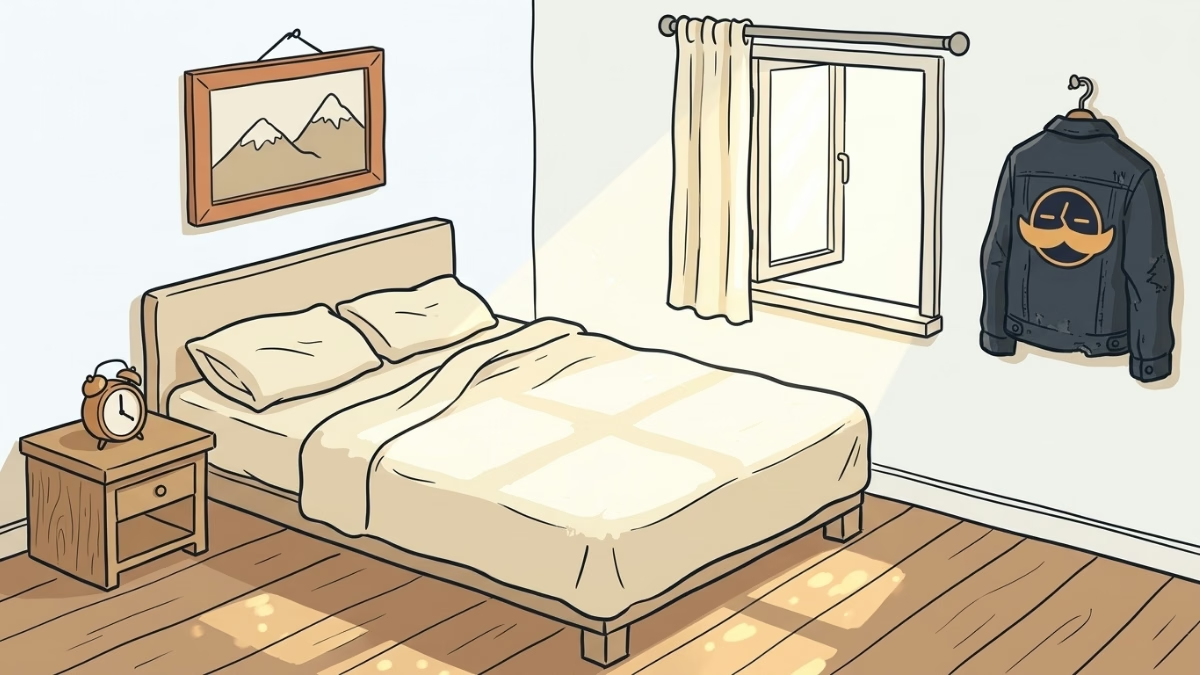
You don’t need a $400 ring on your finger to tell you that you slept badly. You already know. The question is what to actually do about it, without joining a cult.
Here’s the honest answer: the simple sleep hygiene tips that actually move the needle are boring, free, and most of us are already aware of them. Consistent schedule. Cool room. Less phone. No booze right before bed. That’s the core of what the CDC, Harvard Health, and a solid body of sleep research actually recommend. The biohacking industry has spent years dressing those four things up in enough jargon and gadgetry that people forget the basics work. They do. Let’s talk about how to actually use them.
Key Takeaways
- In 2024, 30.5% of U.S. adults reported short sleep duration, meaning ‘just sleep more’ is too vague to be useful for a lot of people, the schedule matters more than the total hours chased.
- Adults 18-60 need 7 or more hours of sleep per night, per the NICHD, a floor, not a magic number to obsess over.
- A 2025 PubMed review found unstable sleep timing is linked to poorer mental, metabolic, vascular, cognitive, and survival outcomes, consistent wake time is the highest-yield habit.
- Harvard Health recommends keeping the bedroom around 65-68°F, which is colder than most people run their thermostat.
- Alcohol feels like a sleep aid but causes nighttime waking as it metabolizes, it borrows sleep from the second half of the night.
Why So Many of Us Sleep Badly (And It’s Not What You Think)
In 2024, 30.5% of U.S. adults reported short sleep duration, 15.4% had trouble falling asleep, and 18.1% had trouble staying asleep. So if you’re lying there at midnight watching the ceiling spin, you have a lot of company. None of that makes it less miserable, but it does mean the problem is common enough to have real, well-studied solutions.
The mistake most people make is treating sleep like a performance to optimize rather than a function to protect. You start tracking every metric, buying supplements with names that sound like rejected superhero aliases, and reading threads at 11 PM about how to sleep better. (The irony is not lost on anyone.) The result is that bedtime becomes another thing you can fail at, which is genuinely the last thing a stressed-out adult needs.
The goal here isn’t perfect sleep. It’s a stable, realistic system that gets you enough rest most nights without turning your bedroom into a laboratory.
The One Habit That’s Actually Worth Obsessing Over
If you’re only going to change one thing, make it this: pick a wake time and hold it. Every day. Including weekends. This is the simplest way to fix your sleep schedule without buying anything.
A 2025 review in PubMed found that sleep regularity is a core component of sleep hygiene and that unstable sleep timing is linked to poorer mental, metabolic, vascular, cognitive, and survival outcomes. That’s a lot of categories to be losing in because you slept until noon on Saturday.
The reason wake time matters more than bedtime is that you can’t always force yourself to fall asleep, but you CAN force yourself to get up. A consistent wake time anchors your circadian rhythm. After a few weeks, your body starts getting sleepy at roughly the right time on its own, like a dog that knows when dinner is. (Except you’re the dog. And dinner is unconsciousness. Stay with me.)
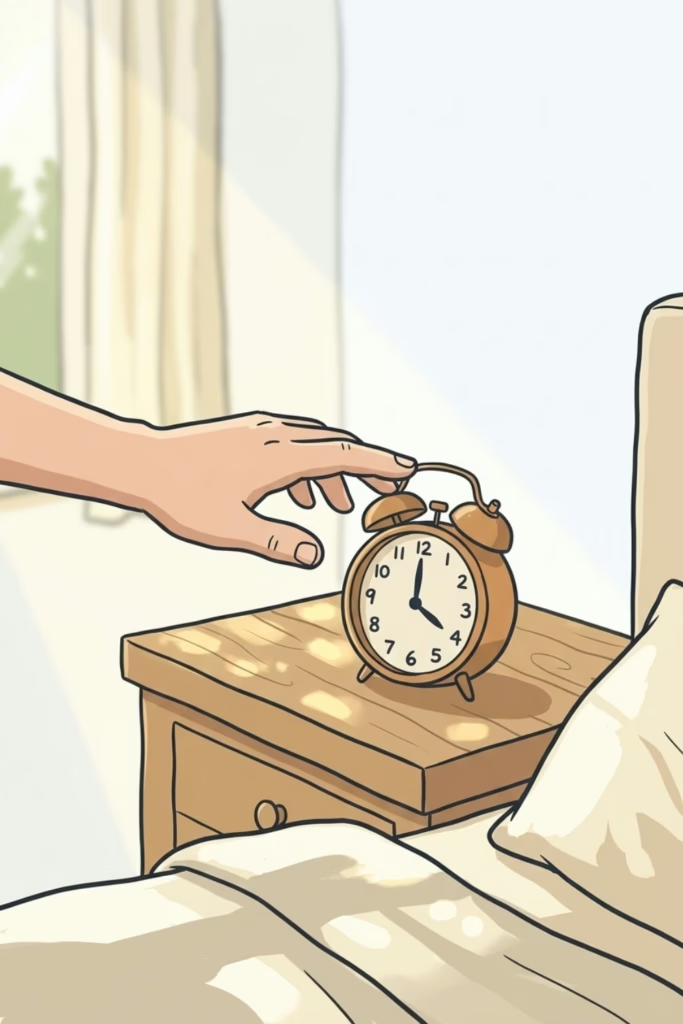
This is the unsexy truth about fixing your sleep: the most powerful intervention is an alarm clock used consistently. No subscription required.
The Room: Colder Than You Think
Harvard Health recommends keeping the bedroom around 65°F to 68°F at night. That’s colder than most people run their thermostat during the day, and significantly colder than the “comfortable” 72°F a lot of us default to.
Your core body temperature naturally drops as you fall asleep. A cooler room helps that process along. A cool bedroom for sleep isn’t a luxury. It’s just physiology. A warm room fights it. If you’ve ever slept terribly in a hotel with bad AC and blamed the pillow, the pillow was innocent.
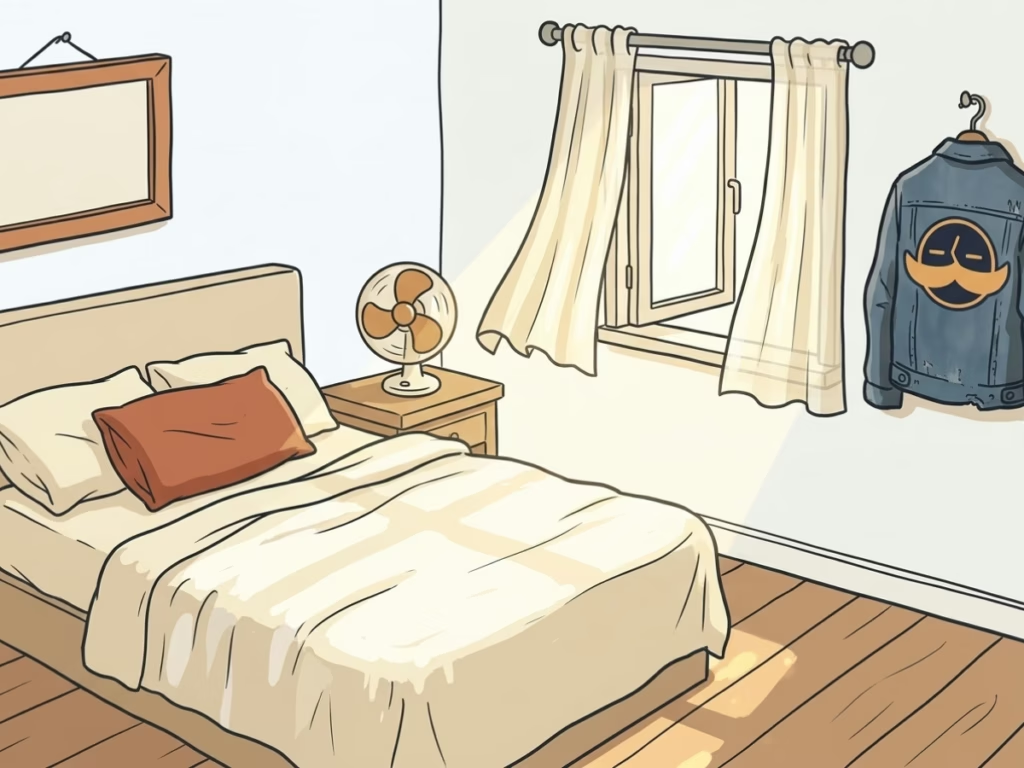
You don’t need to go full meat locker. But if you’ve never tried sleeping at 66°F, it’s worth a week’s experiment before you spend money on anything else. Crack a window, point a fan at the bed, or just turn the heat down before you turn in. It takes thirty seconds and genuinely works.
The Phone: Yes, They’re Right, You Know They’re Right
The CDC’s sleep guidance explicitly includes turning off electronic devices at least 30 minutes before bedtime. Stopping scrolling before bed is the advice everyone knows and roughly nobody follows. I’m not going to pretend I’m better than you here. I’ve definitely been horizontal in the dark, doom-scrolling at 12:30 AM, fully aware that I was making a choice I’d regret in six hours.
The issue isn’t just the blue light (though that’s real). It’s that your phone is an anxiety machine. The news, the notifications, the comparison spiral of other people’s highlight reels, none of that is chemically compatible with telling your nervous system to stand down. You’re asking your brain to go from “mildly alarmed about everything” to “deeply unconscious” in thirty seconds, and it’s not going to do that.
If a hard cutoff sounds brutal, try this: charge your phone in another room and buy a five-dollar alarm clock. Suddenly the temptation disappears because the phone isn’t there. Simple problems sometimes have simple solutions. (We know. Alarm clocks haven’t been around for decades. It’s time for a comeback.)
If you want something to do in that pre-sleep window instead of scrolling, the 5-minute journal is a genuinely low-effort way to dump the day’s mental noise somewhere other than your pillow.
Alcohol, Caffeine, and the Lies They Tell You
Alcohol is the sneaky one. It makes you feel sleepy, which is why a lot of people use it as a wind-down tool. The problem is that as your body metabolizes it, alcohol becomes stimulating and causes nighttime waking, per Harvard Health. So you fall asleep fine and then you’re wide awake at 3 AM for no apparent reason, which is its own special kind of terrible. It’s borrowing sleep from the second half of the night and charging interest.
Caffeine is more straightforward. It sticks around longer than most people realize. Which means an afternoon coffee is still hanging around in your system at night. The CDC’s guidance on sleep explicitly flags caffeine before bedtime as something to avoid. If you’re a heavy coffee drinker who “can sleep fine after an espresso,” you may be right, or you may have just forgotten what real sleep feels like. (Not judging. Genuinely not judging. But worth a two-week experiment.)
The Wind-Down Window: One Hour, Low Effort
Harvard Health suggests reserving about an hour before bed to wind down. This sounds luxurious if you’re a parent or work late, so let’s be realistic: even twenty minutes of intentional decompression beats zero.
The goal is to signal to your nervous system that the workday is actually over. That could be a warm shower (your body temperature drops afterward, which mimics the sleep-onset temperature drop), reading something that isn’t the news, or a few minutes of box breathing. That last one sounds aggressively wellness-y, but the 60-second reset version is legitimately useful and takes less time than checking your email one more time.
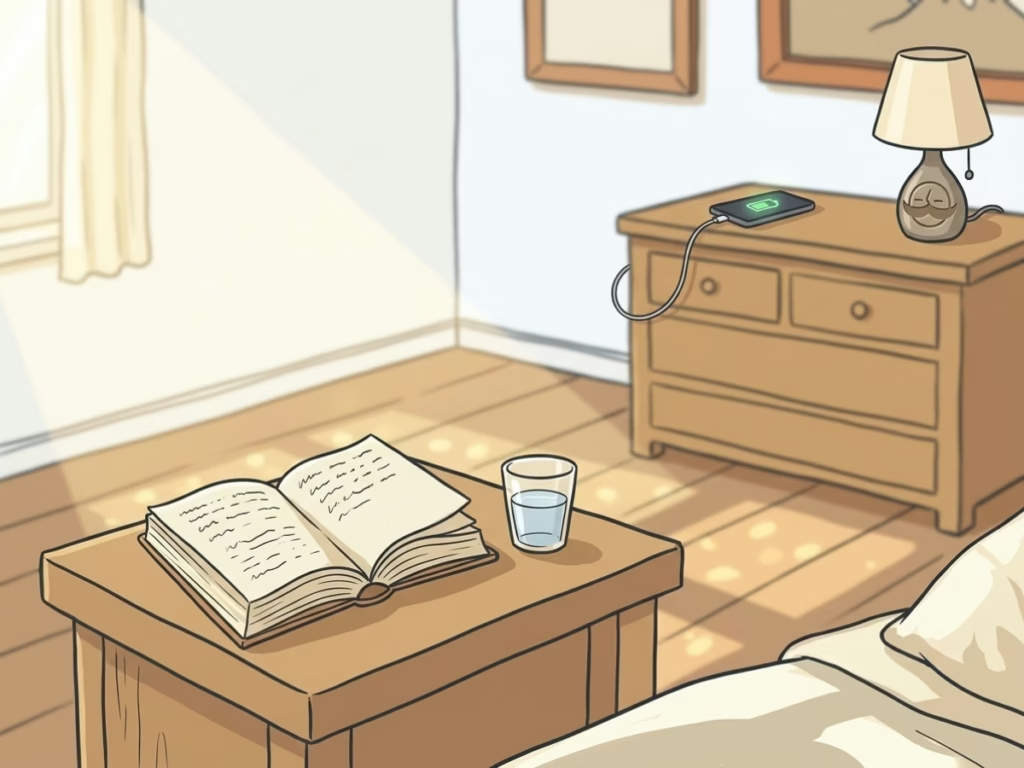
The bedroom itself should be dark, quiet, and used for sleep. That’s it. If you’ve been working from your bed or watching TV there for years, your brain has been quietly reclassified it as a general-purpose room, not a sleep room. That association takes a few weeks to rebuild, but it does rebuild.
What About Exercise?
The CDC’s sleep guidance includes exercise as a habit that can improve sleep quality. This is one of those facts that sounds like a chore but is actually good news: the same thing that’s good for your heart, your mood, and your waistline also helps you sleep better. It’s not a separate task. It’s two birds with one stone.
You don’t need a two-hour gym session. Even a 10-minute workout earlier in the day is enough to make a difference. The caveat is timing: vigorous exercise right before bed can delay sleep onset for some people, so earlier is generally better. But if late-night is the only time you have, a moderate workout is still better than no workout. Don’t let perfect be the enemy of actually moving.
How Much Sleep Do You Actually Need?
The NICHD recommends 7 or more hours per night for adults 18 to 60, with adults 61 to 64 needing 7 to 9 hours and adults 65 and older needing 7 to 8. That “7 or more” is a floor, not a target. Some people genuinely thrive on 7. Others need 9. You probably already have a rough sense of which camp you’re in.
What this means practically: stop trying to optimize for a specific number and start paying attention to how you feel after different amounts of sleep. The goal is to feel functional and reasonably human during the day, not to hit a metric. If you’re consistently running on six hours and feeling fine, that’s useful information. If you’re running on six hours and feeling like a weather-beaten scarecrow by 2 PM, that’s also useful information.
Frequently Asked Questions
What’s the single most important sleep hygiene habit?
Consistent wake time, every day including weekends. A 2025 review in PubMed found that unstable sleep timing is linked to worse mental, metabolic, vascular, cognitive, and survival outcomes, per PubMed. You can’t always control when you fall asleep, but you can control when you get up, and that anchor is what stabilizes the whole system.
How cool should my bedroom actually be?
Harvard Health recommends around 65°F to 68°F. That’s colder than most people keep their homes during the day. A fan or cracked window can get you there without touching the thermostat, which is useful if you share the space with someone who runs warm.
Does alcohol really hurt sleep?
Yes, even if it helps you fall asleep faster. As alcohol metabolizes, it becomes stimulating and causes nighttime waking, per Harvard Health. The first half of the night might feel fine; the second half is where it takes the money back.
How long before bed should I stop using my phone?
The CDC recommends turning off electronic devices at least 30 minutes before bedtime. In practice, the further away from bed the phone physically is, the easier this gets. An alarm clock costs less than a single bad night’s productivity.
Do I need supplements or a sleep tracker?
For most people, no. The habits above, consistently applied, address the main drivers of poor sleep without spending anything. Trackers can be useful for spotting patterns, but they can also turn sleep into something you perform and then grade yourself on, which tends to make anxious sleepers more anxious. Get the basics right first, then decide if you need more data.
Start Here Tonight: Simple Sleep Hygiene Tips That Actually Work
The whole playbook is simple sleep hygiene tips for men that have been around long enough to be boring and work well enough to still be worth repeating: consistent wake time, cool room, no screens for thirty minutes before bed, no alcohol as a sleep aid, and some kind of wind-down that isn’t your phone.
Pick one of those and do it tonight. Not all five. One. The consistent wake time is the highest-leverage place to start, so if you’re choosing, choose that. Set the alarm for tomorrow, hold it, and give it two weeks before you decide it isn’t working.
That’s it. You don’t need a cult. You don’t need a tracker. You need a boring routine and the patience to let it become automatic. Turns out the best sleep upgrade you can make is just showing up at the same time every morning, which is both deeply anticlimactic and genuinely true.
Get The Enough List — free.
Ten minutes, five areas. A short guide for figuring out what enough looks like in money, health, work, people, and time — before you go sprinting at someone else's finish line. Yours when you subscribe.

[…] the morning is already broken. If you got four hours of patchy sleep (stress will do that, we’re all aware), the only honest W is surviving it with some dignity […]