
Saying no is free. Somehow it feels like it’ll cost everything though.
If you’ve ever agreed to something, a favor, an extra project, a family commitment you had zero bandwidth for, and then spent the next three days resenting both the ask and yourself for caving, this one’s for you. Whether it’s a family obligation or a habit of overcommitting at work, the pattern is the same. Learning how to say no without feeling guilty isn’t about becoming cold or difficult. It’s about protecting the time and energy you actually need to show up for the things that matter.
Here are two tactics that work, backed by research, and one script you can use today.
Key Takeaways
- A 10-second pause before responding to a request cuts impulsive agreements by 25%, per research cited in The Influence Journal.
- Saying ‘I don’t’ instead of ‘I can’t’ reduces perceived guilt and strengthens personal agency by framing the refusal as a choice.
- Pre-rehearsing a go-to refusal phrase trains the brain to default to a considered no rather than a reflexive yes.
- Offering an alternative (‘I can’t do X, but I can help with Y’) softens a no without surrendering your boundary.
- Repeating the same calm refusal phrase signals finality and reduces the social pressure that feeds guilt cycles.
The 10-Second Rule
The biggest reason we say yes when we mean no is speed. Someone asks, we feel the social pressure spike, and we agree before our brain has caught up with our calendar. It’s autopilot, not generosity.

A simple fix: wait 10 seconds before you respond. That’s it. According to research on the psychology of saying no, even that small pause cuts impulsive agreements by 25%, per The Influence Journal. Ten seconds is enough time for your actual preferences to show up to the meeting.
You don’t have to explain the pause. “Let me think about that for a second” is a complete sentence. Nobody has ever been offended by someone who thought before they spoke. (Well. Almost nobody.)
Two Words That Change Everything: “I Don’t” vs. “I Can’t”
This one feels small until you try it. When you say “I can’t do that,” you’re implying an external force is stopping you. Your brain hears: I would, but something won’t let me. That framing keeps you in victim mode and keeps the guilt alive.
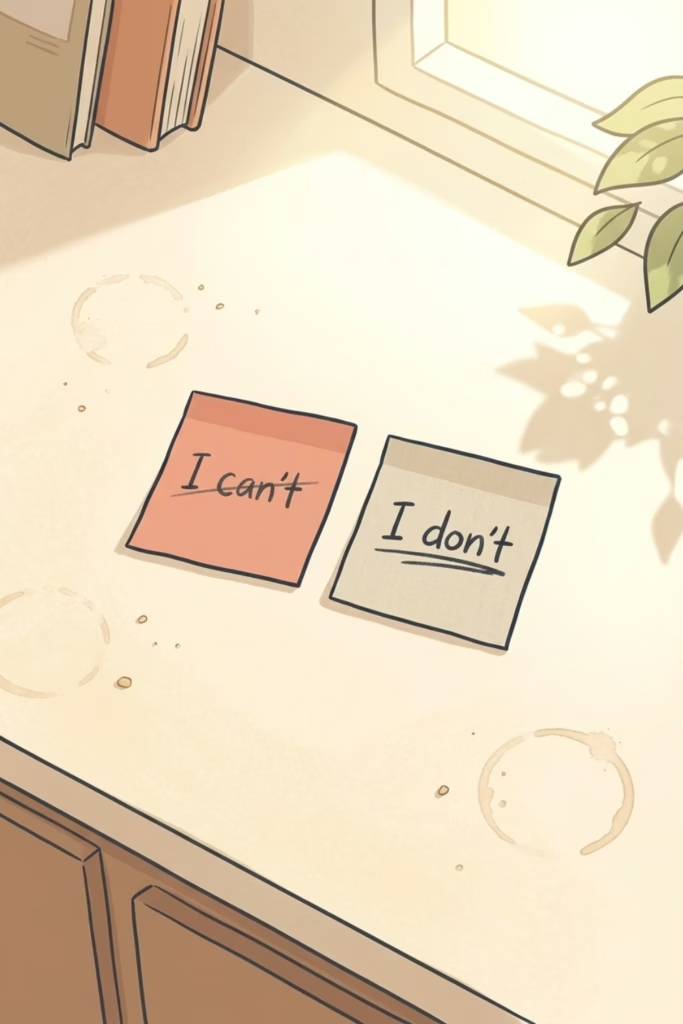
When you say “I don’t do that,” you’re stating a choice. A value. A boundary you own. Research backs this up: using “I don’t” instead of “I can’t” reduces perceived guilt and reinforces personal agency, per Mayo Oshin.
Compare:
- “I can’t take on any more this week.” (implies helplessness)
- “I don’t take on new projects mid-week.” (implies a person who knows their limits)
One of those sounds like an excuse. The other sounds like someone who has their life together. You can be that person even if your desk looks like a paper avalanche.
Scripts for Saying No Politely (And What to Do When They Push Back)
Here’s where most advice stops at “just say no more” and leaves you to figure out the rest. That’s not useful. What IS useful is having a line ready before you need it, so you’re not improvising under pressure.
Greater Good Science Center at Berkeley recommends pre-planning your refusal using an implementation intention: a specific phrase you rehearse so it becomes automatic. Something like:
“I wish I could, but I can’t take on anything more this week.”
Say it out loud a few times. Seriously, that’s important. It feels ridiculous, but one day it just comes out of your mouth when you need it.
If the ask deserves a softer landing, you can offer an alternative: “I can’t do X, but I could help with Y.” You preserve the relationship without torching your schedule. And if someone keeps pushing after a calm, clear no? Repeat the same phrase. Calmly. Twice if needed. A broken record isn’t rude. It’s just final. Your time is yours. Act like it.
This connects to something worth reading if you’re doing a broader audit of where your time actually goes: the life trade deadline framework is a good place to start.
Frequently Asked Questions
Why do I feel guilty when I say no?
Knowing how to say no without feeling guilty starts with understanding what guilt actually is. It’s a social survival signal, not a moral failure. Your brain is wired to flag potential rejection as a threat. The feeling is real; the danger usually isn’t. The more you practice small, low-stakes nos, the less the signal fires.
Does “I don’t” actually work better than “I can’t”?
Yes. Research shows that “I don’t” framing reduces guilt and strengthens personal agency compared to “I can’t,” because it positions the refusal as a choice rather than an external constraint, per Mayo Oshin. It’s a small linguistic shift with a disproportionate psychological payoff.
What if the person keeps pushing after I say no?
Repeat the same phrase, calmly, without adding new reasons. Greater Good Science Center at Berkeley notes that staying calm and repeating the same refusal signals the decision is non-negotiable, which reduces the pressure cycle. Adding more justifications just opens more angles for negotiation.
How do I say no at work without damaging the relationship?
Lead with acknowledgment, then decline clearly. “That sounds like an important project, and I genuinely can’t give it the attention it deserves right now” lands better than a flat no. If you can offer an alternative timeline or a partial yes, do it, but only if you mean it.
What’s the single best thing I can do today?
Write down one go-to “no” phrase and say it out loud three times before you need it. Rehearsed responses are faster and calmer than improvised ones. That’s the whole trick.
Today’s action: the next time someone makes a request and you feel the automatic yes forming, count to ten. That’s it. Just count (in your head). See what comes out after.
If you’re working on pacing yourself more broadly, this one on sustainable effort is worth a few minutes.
Get The Enough List — free.
Ten minutes, five areas. A short guide for figuring out what enough looks like in money, health, work, people, and time — before you go sprinting at someone else's finish line. Yours when you subscribe.

[…] letting that one friendship drain you dry? (If you’re working on that last one, the piece on reclaiming your time and energy is worth fifteen minutes of your […]
[…] more on drawing that line without feeling like you’re quitting, The Quiet No is worth a […]