
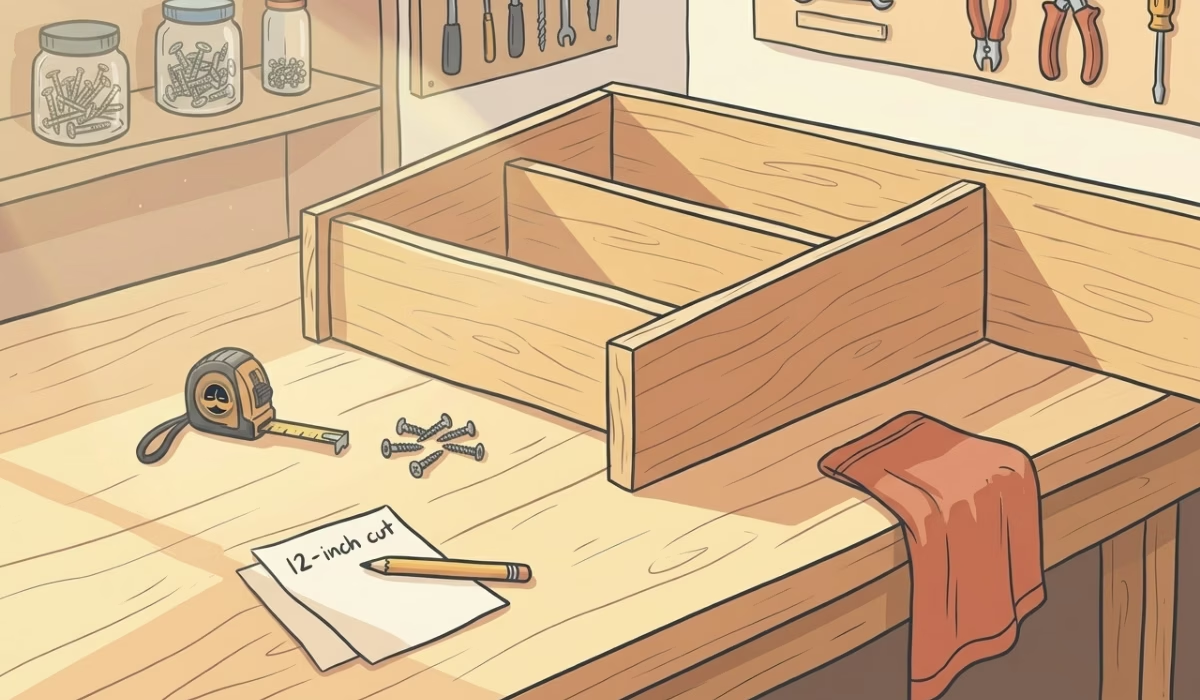
A failed DIY project is a skill-building event, not a verdict. Experts note that reflecting on what went wrong, rather than rushing to fix it, is the single most effective way to prevent repeating the same mistake.
That deck you half-built, the furniture repaint that looks like abstract art, the shelving unit that now leans like it’s had a few drinks, none of that is wasted. A failed DIY project is one of the most efficient teachers you’ll ever have, and the summer you spent wrestling with it just put you miles ahead of where you were in May.
Here’s the honest truth about learning from failed DIY projects: the failure itself isn’t the problem. Skipping the debrief is.
Key Takeaways
- Reflecting on what went wrong rather than rushing to fix it is identified as the key to learning from DIY failure, per takediy.com.
- A growth mindset approach, taking notes on missteps to avoid repeating them, is one of the best ways to prevent future DIY mistakes.
- Waiting roughly a month before re-attempting a botched project can restore motivation and make the fix feel more manageable.
- Many DIY projects fail because the builder underestimates the skill required; identifying that gap and filling it (YouTube, in-store workshops) turns the failure into a skill accelerator.
- Treating a failed project like a science experiment, document where it broke, change one variable, rebuild, converts frustration into usable data.
The Project Broke. Now What?
First, step away from it. Not forever, about a month, actually. There’s a real case for this: one DIYer who botched a furniture repaint found that waiting roughly a month before revisiting it helped her forget the difficulty and rebuild the motivation to fix it properly, per A Butterfly House. Turns out frustration has a half-life, and trying to fix something while you’re still annoyed at it is like grocery shopping while hungry. You end up with more than you intended.
Once you’ve had some distance, come back with a notebook instead of a power tool.
Run the Failure Audit: Learning From Failed DIY Projects (It Takes 10 Minutes)
This is the move that separates the people who repeat mistakes from the people who actually get better. Experts specifically point to taking time to understand what went wrong, rather than rushing to fix it, as the key to improving, per TakeDIY. Also, a growth mindset approach, meaning you write down the misstep and what you’d change, is one of the most reliable ways to avoid the same trap on the next project per DIYWithHelp.
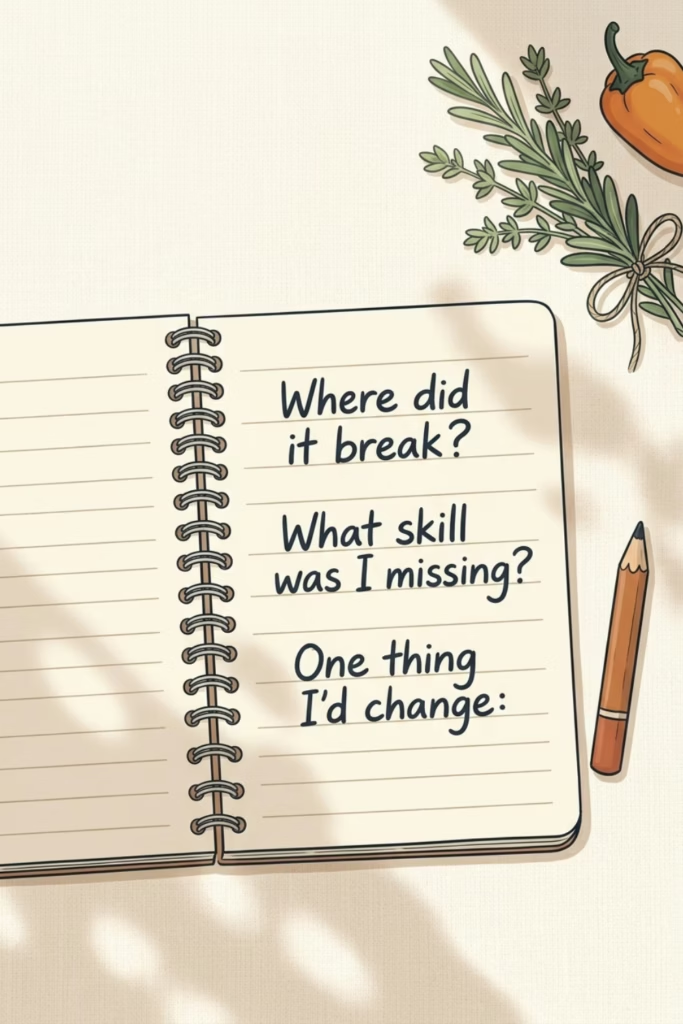
Practically, ask yourself three things:
- Where did it actually break? Be specific. “It looked bad” is not a diagnosis. “The joints weren’t flush because I rushed the measuring” is.
- What skill was I missing? This one stings a little, but it’s useful. Many DIY projects fail because we underestimate what’s required, and identifying that gap is the first step to closing it, per Our Home Made Easy. YouTube tutorials and in-store workshops were basically invented for this exact moment.
- What’s the one change I’d make? Not five changes. One. Like the classic popsicle bridge challenge, you test it, it breaks, you record exactly where the glue came loose, you change one thing, and you rebuild, per DIY.org. That’s not failure. That’s just engineering.
Why This Is Actually a Win
Here’s the thing nobody says out loud: a project that goes smoothly teaches you almost nothing. You followed the steps, it worked, great. You’ve learned that following steps works. Congratulations, you’ve confirmed gravity.
A project that falls apart, literally or figuratively, forces you to understand why it fell apart. That’s the skill that will force you to learn. (This is also why finishing last in a hobby is often more valuable than you’d think.)
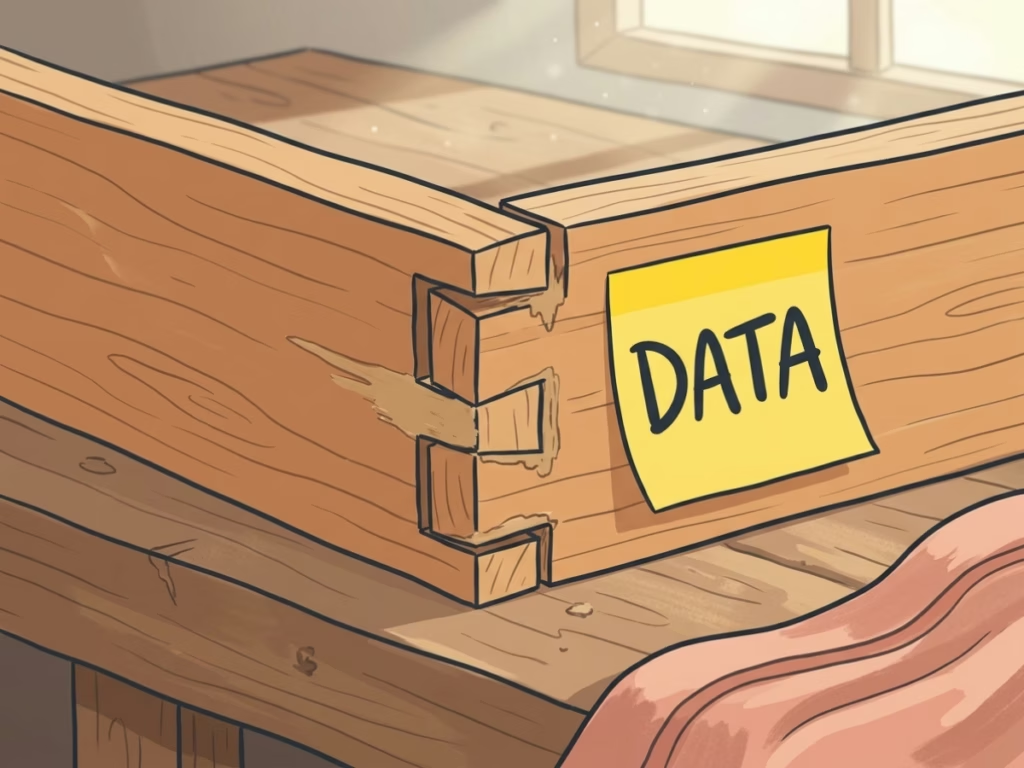
The summer project you’re embarrassed about? It’s data. Expensive, occasionally ugly data, but data.
Frequently Asked Questions
Why do most DIY projects fail?
Many DIY projects fail because builders underestimate the skill required or skip research on individual project steps before starting. Identifying the specific skill gap after a failure, and filling it through tutorials or workshops, is one of the most effective recovery moves, per Our Home Made Easy.
Should I fix my failed project right away?
Probably not immediately. Waiting about a month allows the frustration to fade and motivation to return, making the fix feel more approachable rather than like punishment, per A Butterfly House. Use the waiting period to plan what you’d do differently, not to avoid the project entirely.
If the structure is sound but the finish is rough, salvaging botched DIY projects is usually faster than starting over. The failure audit tells you which situation you’re in.
How do I actually learn from a DIY failure?
The key is reflection over reaction. Take time to understand specifically what went wrong before picking up a tool again, per TakeDIY. Write it down, what broke, why it broke, and one concrete change you’d make, then rebuild with that one change as your test.
Is “measure twice, cut once” really that important?
It’s almost annoyingly important. Double-checking measurements is one of the primary cited reasons DIY projects go wrong, and it’s also the easiest mistake to avoid, per DIYWithHelp. It feels tedious until the moment it saves you from buying the same board twice.
Your one action for today: grab a piece of paper and write three sentences about the project, where it broke, what skill you were missing, and one thing you’d change. That’s the whole debrief. You don’t have to fix anything yet. Just name it. That’s how a failed summer project becomes the foundation for the next one that actually works.
And if you want a longer read on pacing yourself through this kind of thing without burning out, this one on Tour de France pace for amateurs is worth five minutes.
Get The Enough List — free.
Ten minutes, five areas. A short guide for figuring out what enough looks like in money, health, work, people, and time — before you go sprinting at someone else's finish line. Yours when you subscribe.

[…] And if you’ve ever quit a hobby before finishing anything, that’s not the failure it feels like. […]