

A life audit works best as a quarterly exercise, every three months, score each area of your life on a 1-10 scale, then keep what scores 7 or above, cut what’s draining time without return, and acquire one utility skill that closes the biggest gap.
Every August, MLB general managers face a hard deadline: keep the roster you have, trade away what’s not working, and go acquire the piece that gets you to October. No extensions, no “let’s revisit this in a few months.” The deadline is the deadline.
Your life has the same structure, and most of us ignore it completely. This life audit 2026 framework is simple: every quarter, score each area of your life, keep what’s earning its place, cut what’s draining you, and acquire one skill that closes the biggest gap. Score each area of your life on a 1-10 scale. Keep what’s earning its place. Cut what’s quietly draining you. Acquire one skill that closes the biggest gap. That’s it. Not a personality overhaul, not a vision board, not a four-hour Sunday session staring at a whiteboard. Just a clear-eyed look at the roster you’re running and a few deliberate moves.
Key Takeaways
- Score each life area (career, health, relationships, finances) on a 1-10 scale and prioritize any area below 7 for near-term improvement, per BetterUp’s life-planning framework.
- Personal development trends in 2026 favor utility skills, practical, self-sufficiency-building abilities, over adding hobbies just to stay busy.
- Small, consistent actions like 15 minutes of daily journaling build momentum more effectively than dramatic lifestyle overhauls, according to research cited by Dr. Paul McCarthy.
- SMART goals require a time-bound deadline to create real urgency, a goal without a deadline is just a preference.
- Quarterly reviews every three months let you reassess and pivot before drift becomes permanent, rather than waiting for a once-a-year reckoning.
Why Once a Year Is Already Too Late
Most people do a life audit exactly once. January 1st, somewhere between the hangover and the gym membership they’ll use four times. By March, the audit is a memory. By July, they’re running the same lineup they had in December.
The problem isn’t motivation. It’s timing. One annual review is too infrequent to catch the slow drift. Habits erode gradually. Commitments that made sense in January stop making sense by April and nobody notices until November, when you’re wondering where the year went.
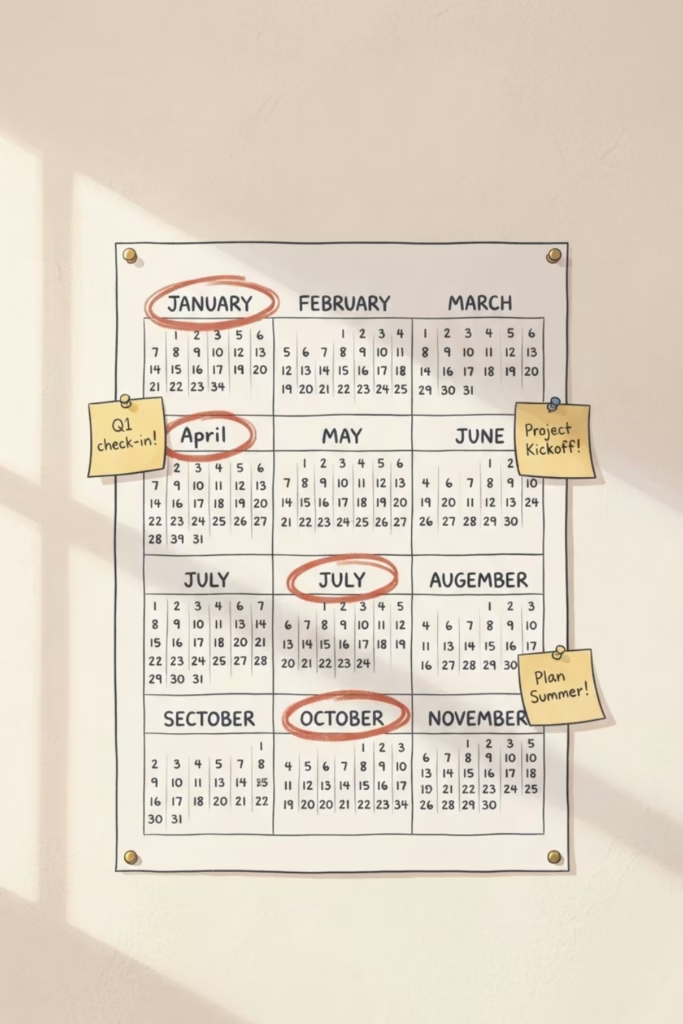
Quarterly reviews, every three months, fix this. They let you reassess and pivot before drift becomes a permanent feature of your life, per Kacerr’s personal development guide. Think of it like a coach reviewing game film every few weeks instead of waiting until the season’s over to notice the defense has been a disaster.
The months write themselves: January, April, July, October. One hour each. You’re not rebuilding from scratch every time, you’re making small, deliberate adjustments. Which is how actual improvement works.
The Life Audit 2026: Score Everything Honestly
Before you decide what to keep, cut, or acquire, you need an honest read on where things actually stand. No flattering yourself, no catastrophizing.
Here’s the move: list out the main areas of your life. Career. Health. Finances. Relationships. Hobbies and personal growth. Whatever feels like a real category for you. Then score each one from 1 to 10. This is the core of any solid personal development plan 2026. Knowing your actual satisfaction level, 1 to 10, across every life-planning category before you decide what to change. Not where you want it to be. Where it actually is, today.
The BetterUp life-planning framework puts the threshold at 7, any area scoring below that deserves priority attention in your near-term plan. I like this because it removes the emotional negotiating. You don’t have to feel like something is a problem. If it scores a 5, it’s a problem. The number says so.
(This is also where most people discover that the area they’ve been loudly complaining about, “I’m so busy, I have no time”, scores a 6, while the area they’ve been quietly avoiding, finances, usually, scores a 4. The number doesn’t care about your narrative.)
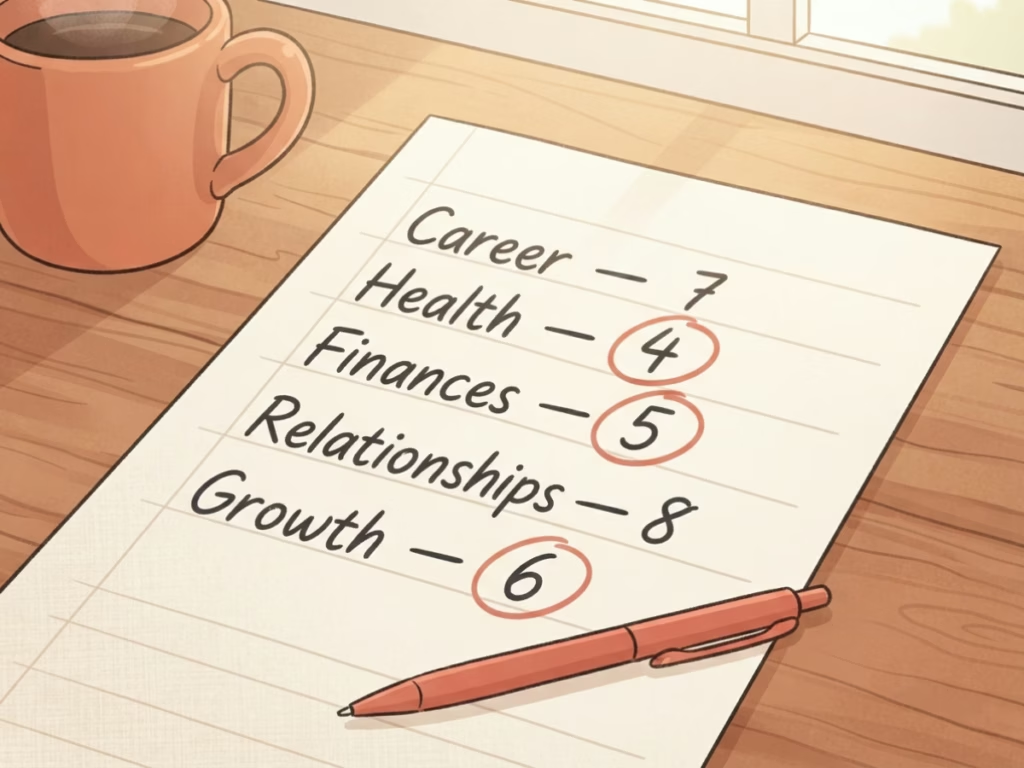
Score everything. Be honest. Circle anything below 7. Those are your trade targets.
Keep: What’s Actually Earning Its Place
The “keep” column is where people are surprisingly bad. We hold onto things out of habit, guilt, or sunk-cost logic, not because they’re actually working.
Something earns a “keep” if it scores 7 or above and it’s actively contributing to an area you care about. Not just “I’ve been doing this for two years so I should probably keep doing it.” That’s not a reason. That’s a complex mix of denial, optimism, a tinge of laziness and fear of change for the worse.
The things worth keeping tend to share a few traits. They’re repeatable without requiring heroic willpower. They’re connected to something you actually value, not something you think you should value. And they compound, a little better each month, even if you can’t see it week to week.
If you’ve got habits or commitments that hit all three, protect them. Don’t let the “cut” and “acquire” excitement crowd out what’s already working. The silent wins are real, even when nobody’s watching.
Cut: The Harder Half
Here’s the thing nobody tells you about cutting: it feels like failure even when it’s the right call. A team trading away a veteran isn’t admitting the veteran was bad, they’re being honest about fit, timing, and what the team actually needs right now.
Same logic applies to your life. Cutting a commitment doesn’t mean it was a mistake. It means you’re being honest about what the current version of your life actually has room for.
The 2026 personal development landscape has gotten pretty clear on this: people are dropping “busy” hobbies, things added to fill time or look well-rounded, to focus on utility skills that actually increase self-sufficiency, per Loving Life and Living on Less. Less “I started a sourdough Instagram” and more “I can actually cook a real meal without panicking.” Less performance, more function.
Look at your below-7 list. For each one, ask a single question: Is this area low because I haven’t invested in it, or because I’ve been investing in the wrong things?
If you’re scoring a 4 on health but spending six hours a week on a hobby that’s giving you diminishing returns, that’s not a health problem. That’s a time-allocation problem. The cut is obvious once you name it.

One practical filter: if a commitment takes consistent time but doesn’t score above a 5 on either enjoyment or usefulness, it’s a cut. No ceremony required. You don’t have to announce it to anyone. You just need to walk away.
Acquire: One Utility Skill, Not a New Identity
This is where the hustle-bro version of this conversation goes off the rails. “Acquire” becomes a shopping list. New morning routine. New workout program. New productivity system. New side hustle. New version of yourself, available now for three easy payments.
That’s not acquiring, that’s hoarding. And it produces the same result as hoarding: a cluttered life where nothing actually gets used.
The smarter move, and the one that’s actually trending in 2026, is to acquire one utility skill per quarter. Something practical. Something that makes your daily life more functional and less dependent on workarounds. Learning to do basic home repairs. Getting comfortable cooking a few solid meals from scratch. Building a simple budget that you actually look at. These aren’t glamorous. They’re also not going anywhere, and they compound quietly for years.
Small, consistent actions build momentum more effectively than dramatic overhauls, according to Dr. Paul McCarthy’s research on personal development. Fifteen minutes of daily practice on one skill beats a weekend bootcamp you abandon by Tuesday, per Dr. Paul McCarthy’s personal development research.

Pick the one skill that addresses your lowest-scoring area. Set a SMART goal around it, specific, measurable, achievable, relevant, and crucially, time-bound. “Get better at cooking” is not a goal. “Cook three new recipes per week for the next 90 days” is a goal. One has a deadline. The other is a preference.
Think of it like pacing a long race, the goal isn’t to sprint through the acquisition phase. It’s to build something sustainable enough to still be doing in three months when the next audit rolls around.
The 90-Day Playbook
Here’s what this actually looks like in practice, without the fluff.
Week 1 of the quarter: Run the roster audit. Score your life areas 1-10. Identify what’s keeping, what’s cutting, and what one skill you’re acquiring.
Weeks 2-12: Do the thing. Not perfectly, just consistently. Five minutes of reflection during morning coffee to track whether you’re actually moving on the one thing you said you’d move on. Weekly, look at the pattern. Are you making progress or are you already drifting? Adjust early.
End of the quarter: Score again. Compare. Decide what stays, what goes, and what comes in next.
That’s the whole system. It’s not complicated. The hard part isn’t the framework, it’s being honest during the scoring, and being willing to actually cut the things the score tells you to cut. Most of us would rather add a new habit than admit an old one isn’t working. (I say “most of us” because I have a graveyard of side projects that I kept “acquiring” for about two years before the quarterly audit made me stop lying to myself.)

Frequently Asked Questions
How often should I do a life audit?
A life audit 2026 or any year works best on a quarterly cadence. Every three months gives you enough time to see real progress on a new habit while catching drift before it becomes permanent. An annual audit is better than nothing, but by the time January rolls around, you’ve often been off-track for nine months without realizing it. Think of it as a quarterly review rather than a yearly reckoning.
What areas of life should I include in a life audit?
The core categories most frameworks use are career, health, finances, relationships, and personal growth or hobbies. Score each on a 1-10 scale and treat anything below 7 as a priority area, per BetterUp’s life-planning approach. You can add or remove categories based on what’s actually relevant to your life, the point is honest coverage, not a perfect taxonomy.
What’s a utility skill and why does it matter more than a hobby?
A utility skill is a practical ability that increases your self-sufficiency, cooking real meals, basic home repair, personal finance, that kind of thing. The distinction matters because 2026 personal development trends show people moving away from adding hobbies just to stay busy, toward skills that actually reduce friction in daily life. A hobby you enjoy is worth keeping. A hobby you added because you thought you should have it is a candidate for the cut list.
How do I set a goal that actually has teeth?
Make it SMART, and don’t skip the time-bound part. A goal without a deadline is just a preference. “I want to exercise more” becomes “I’ll work out three times a week for 30 minutes over the next 90 days,” per the SMART framework. The deadline creates accountability. The specificity makes it measurable. Both matter.
What if I don’t want to cut anything?
That’s fine, but be honest about why. If everything you’re doing genuinely scores 7 or above and is contributing to something you care about, then nothing needs cutting, you’re in good shape. But if you’re holding onto things out of guilt, habit, or sunk-cost logic rather than actual value, that’s worth examining. The audit isn’t about minimalism for its own sake. It’s about making sure the things taking your time are actually earning it.
The One Move to Make Today
You don’t need to wait for the next quarter to start. Right now, before you close this tab, write down five areas of your life and give each one a number from 1 to 10. Just the number, no explanation, no justification. Look at what’s below 7. Pick the lowest one.
That’s your trade target.
Now pick one small, specific action you can take this week to move that number. Not a plan. Not a system. One action. If it’s health, maybe it’s a 20-minute walk tomorrow. If it’s finances, maybe it’s opening a budget spreadsheet and filling in last month’s numbers. If it’s a skill you’ve been meaning to build, maybe it’s 15 minutes of practice before you open your phone in the morning.
The deadline is always now. The roster you’re running today is the one that gets you, or doesn’t get you, to wherever you’re trying to go. Rest when you need to rest, but make the call deliberately. Keep what’s working. Cut what isn’t. Acquire the one thing that actually moves the needle.
Everything else is just noise.
Get The Enough List — free.
Ten minutes, five areas. A short guide for figuring out what enough looks like in money, health, work, people, and time — before you go sprinting at someone else's finish line. Yours when you subscribe.

[…] you want a longer framework for figuring out what to keep and what to cut, the life trade deadline post is a good next read. And if you’re worried that not having a burning passion means […]
[…] something worth reading if you’re doing a broader audit of where your time actually goes: the life trade deadline framework is a good place to […]
[…] your attention the same way you over-commit your schedule, it might be worth a look at what to keep, cut, and acquire more […]
[…] and sketching starts to look less like a hobby and more like a cheat code. It also pairs well with knowing which things in your life are actually worth keeping, because a sketchbook asks almost nothing of you in return for what it […]