

Tim Duncan was, by almost any measure, one of the greatest basketball players who ever lived. He was also, by almost any measure, the least exciting one to watch. And that was entirely the point.
Duncan played all 19 seasons of his NBA career with the San Antonio Spurs, won 5 championships, and earned the nickname “The Big Fundamental”, not because he was flashy, but because he was relentlessly, almost aggressively not. No dunks for the camera. No drama. Just a bank shot off the glass at 11 p.m. on a Tuesday, same as it was at 11 p.m. on a Tuesday in 2004.
The lessons from Tim Duncan aren’t complicated. They’re just easy to ignore when the algorithm keeps serving you someone else’s highlight reel.
Key Takeaways
- Tim Duncan played all 19 seasons of his NBA career with the San Antonio Spurs and won 5 championships, per Wikipedia.
- Duncan made 15 All-Defensive teams, proving his value was built on both ends of the floor, not just highlight-reel moments.
- His nickname ‘The Big Fundamental’ captures the idea that elite, repeatable basics compound into results that flash can’t match.
- Duncan’s career is a counterexample to hustle culture: longevity and consistency outperformed peak explosiveness over time.
Boring Is a Strategy, Not a Personality Flaw
Here’s the thing about “boring” that nobody talks about: it’s incredibly hard to do. Anyone can be exciting for a season. Staying good for 19 of them is a different ask entirely.
Duncan made 15 All-Defensive teams across his career. Not just offense. Defense. The part of the game nobody buys a jersey for. That’s what “fundamentals-first” actually looks like in practice, it’s doing the unglamorous stuff so well, so consistently, that it becomes its own kind of dominance.

His opponents reportedly found it destabilizing. There was nothing to react to. No trash talk, no ego to poke, no predictable emotional spike to exploit. Just Tim Duncan, doing the same correct thing he did yesterday, using his quiet consistency to dismantle people’s game plans before they even realized it was happening. (Turns out “boring” is a superpower when everyone else is busy being interesting.)
The Compounding Math of Showing Up
We love the idea of the breakthrough moment. The overnight success. The one season where everything clicks. Duncan’s career is a quiet argument that this framing is mostly wrong.
Nineteen seasons with one franchise. Five championships. No reinvention tour, no drama-fueled trade request, no “new Tim” era with a different logo on the jersey. Just the same guy, adapting as his body aged, leaning harder on craft when the athleticism dialed back, and staying useful right up until he retired. That kind of quiet leadership, staying useful and adapting without making it anyone else’s problem, is its own form of humility.
That’s the compounding math of showing up. It doesn’t feel like much on any given Tuesday. Over a thousand games it’s a Hall of Fame career.

This is the part hustle culture gets exactly backwards. The goal isn’t to do more, louder. It’s to do the right things so consistently that they stack. Same principle applies whether you’re learning an instrument as an adult, building a savings habit, or just trying to be someone your future self recognizes.
What the Lessons from Tim Duncan Actually Look Like in Practice
You don’t need to be Tim Duncan. You need to find your version of the bank shot.
Pick one thing you want to get better at. Not ten things. One. Figure out the two or three fundamentals that actually drive results in that area, the boring, non-negotiable reps. Then do them consistently enough that they stop feeling like effort and start feeling like Tuesday.
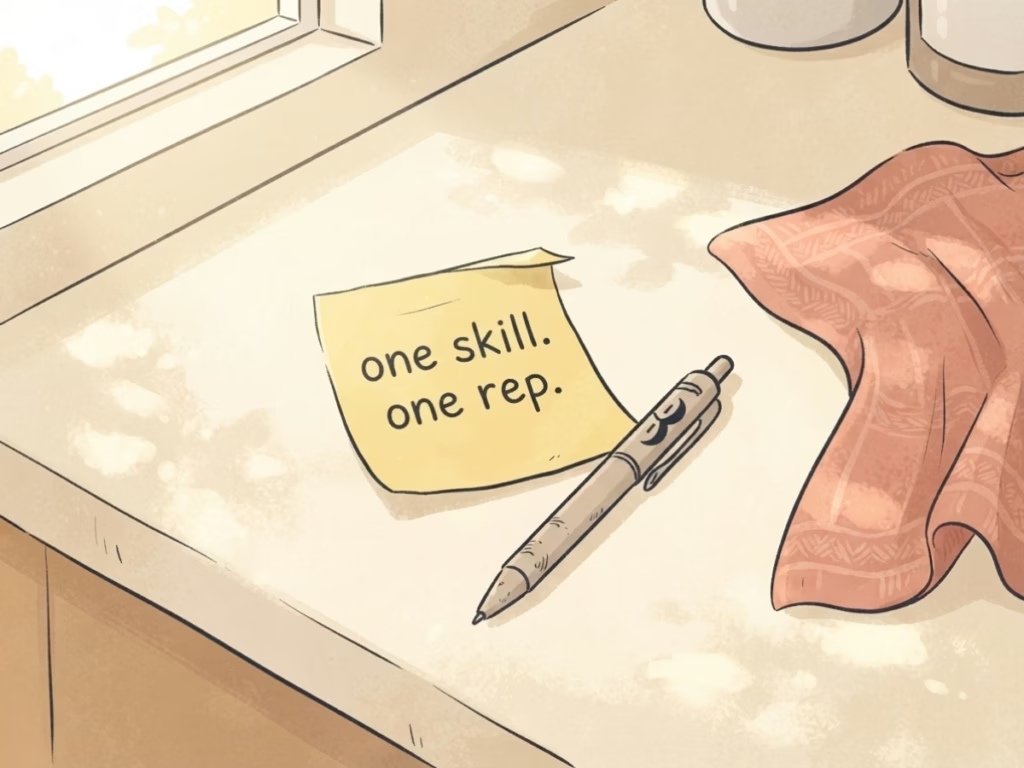
That’s it. That’s the whole framework. No secret. No shortcut. Just the same correct thing, repeated until it compounds into something you’re proud of. It worked for a guy who won five rings and somehow made it look unremarkable. It’ll probably work for you too.
Frequently Asked Questions
What made Tim Duncan so successful?
Duncan’s success came from mastering repeatable fundamentals and staying consistent across 19 seasons with the San Antonio Spurs, rather than relying on athleticism or flash. He adapted as he aged, leaning more on skill and positioning when his physical peak passed, which is why he stayed elite long after most players decline. Five championships is the scoreboard, but the real answer is compounding consistency.
What was Tim Duncan’s nickname and why?
Duncan was nicknamed “The Big Fundamental” because his game was built entirely on correct, repeatable technique rather than highlight-reel plays. It was meant as a gentle dig early in his career; it ended up being one of the most accurate descriptions of a player’s entire philosophy in NBA history.
How does Tim Duncan’s approach apply outside of basketball?
The core lesson is that longevity beats peak flash in almost any field. Doing the basics well, consistently, over a long time tends to compound into results that a brilliant-but-erratic approach can’t match. Whether you’re building a skill, a habit, or a career, Duncan’s model is a useful counterweight to the idea that you need to constantly reinvent yourself or do more to get ahead. For more on this kind of quiet, long-game thinking, the Marcus Aurelius piece covers similar ground from a different angle.
Was Tim Duncan’s “boring” image actually a competitive advantage?
Yes, deliberately so. Without visible ego or emotional tells, opponents had very little to exploit or react to. His consistency made him psychologically difficult to play against, there was no momentum to disrupt because he never had dramatic swings in the first place. Stable and boring, it turns out, is very hard to beat.
The concrete thing you can do today: write down the one skill or habit you actually want to build. Then write down the single most fundamental rep that drives it. Do that rep today. Not ten reps. One. Tim Duncan built a Hall of Fame career on the same bank shot, over and over. You’ve got to start somewhere.
Get The Enough List — free.
Ten minutes, five areas. A short guide for figuring out what enough looks like in money, health, work, people, and time — before you go sprinting at someone else's finish line. Yours when you subscribe.

[…] Duncan built a Hall of Fame career on a bank shot and fundamentals. Same […]
[…] connects to something Tim Duncan modeled his whole career around, boring consistency that looks unimpressive until you zoom out and see the results stacked up over […]